FREE QUOTE

Fill out form for your floor cost estimate.

    By providing your contact information, you consent to be contacted by us via email and/or text message. This site is protected by reCAPTCHA and the Google Privacy Policy and Terms of Service apply.

    Polyaspartic Pool Deck Coating vs Bare Concrete: Which Is Better?

    Polyaspartic Pool Deck Coating vs Bare Concrete: Which Is Better?

    Polyaspartic Patio Coating vs Bare Concrete
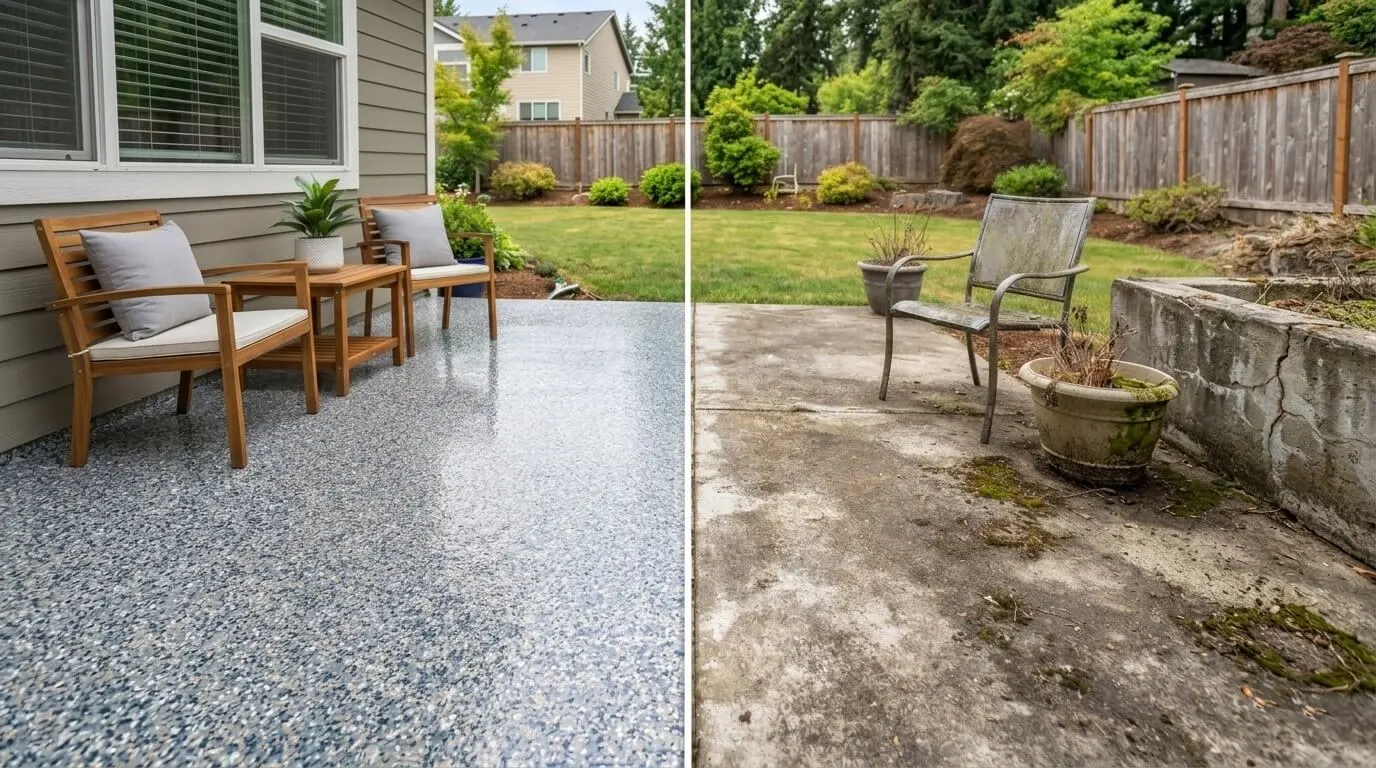
    Short answer: If you’re deciding between polyaspartic patio coating vs bare concrete, a polyaspartic coating offers better durability, stain resistance, slip resistance, and long-term protection. While bare concrete costs less upfront, it is more prone to cracking, moisture damage, UV exposure, and ongoing maintenance, making a professionally coated patio the better long-term investment.
    Patio Coating Guide

    Why Homeowners Choose Polyaspartic Patio Coatings

    Outdoor patios face constant exposure to sunlight, rain, snow, freeze-thaw cycles, dirt, and heavy foot traffic. Although bare concrete seems durable, its porous surface absorbs water, oil, and contaminants that eventually cause stains, cracks, and surface deterioration.

    A professionally installed polyaspartic patio coating creates a seamless protective barrier that improves appearance while extending the life of your concrete. Great Lakes Concrete Coatings installs premium polyaspartic systems engineered for Michigan’s climate, delivering UV stability, fast installation, exceptional durability, and a 15-year warranty.

    Polyaspartic Patio Coating vs Bare Concrete

    Feature Polyaspartic Patio Coating Bare Concrete
    Moisture Resistance Excellent Poor
    UV Protection Won’t yellow or fade Can discolor over time
    Crack Protection Helps protect the surface Cracks easily from weather
    Slip Resistance Textured finish available Slippery when wet
    Maintenance Easy to clean Requires sealing and frequent cleaning
    Stain Resistance Resists oil, dirt, and chemicals Absorbs stains quickly
    Appearance Decorative colors and flakes Plain gray surface
    Installation Typically completed in one day No coating, but ongoing repairs are common
    Key Takeaway: Polyaspartic patio coatings provide superior protection, appearance, and long-term performance while reducing maintenance compared to bare concrete.

    How to Upgrade from Bare Concrete to a Polyaspartic Patio Coating

    Professional Installation Process

    1. Inspect the concrete for cracks, pits, and surface damage.
    2. Diamond grind the concrete to create the ideal bonding surface.
    3. Repair cracks and imperfections.
    4. Apply a premium polyurea basecoat.
    5. Broadcast decorative flakes for texture and style (optional).
    6. Seal the system with a UV-stable polyaspartic topcoat.
    7. Allow the coating to cure before use—often the same day.
    Final Verdict: If you’re comparing polyaspartic patio coating vs bare concrete, polyaspartic delivers better durability, stain resistance, UV protection, safety, and long-term value, making it the smarter investment for outdoor living spaces.

    Frequently Asked Questions

    Is a polyaspartic patio coating worth the investment?
    Yes. While the initial investment is higher than leaving concrete untreated, homeowners typically save money over time through reduced maintenance, fewer repairs, and longer-lasting protection.
    Does polyaspartic coating prevent concrete from cracking?
    No coating can completely stop structural movement. However, polyaspartic coatings help shield the concrete from moisture intrusion and surface deterioration that can contribute to cracking.
    Is polyaspartic coating slippery?
    No. Decorative flakes and anti-slip additives create a textured surface that improves traction, making patios safer even when wet.
    How long does a polyaspartic patio coating last?
    With proper installation and routine maintenance, high-quality polyaspartic coatings can provide many years of reliable performance. Great Lakes Concrete Coatings backs its residential systems with a 15-year warranty.
    Can polyaspartic coatings handle Michigan winters?
    Yes. Polyaspartic coatings are designed to resist freeze-thaw cycles, road salt, UV exposure, and moisture, making them well suited for Michigan’s changing seasons.
    Is bare concrete harder to maintain?
    Yes. Bare concrete absorbs moisture, dirt, oil, and chemicals, requiring periodic sealing and more frequent cleaning. Polyaspartic-coated patios are non-porous, making maintenance much easier.

    Conclusion

    When comparing polyaspartic patio coating vs bare concrete, the advantages of polyaspartic become clear. Bare concrete may seem more affordable upfront, but it requires more maintenance, provides less protection, and typically wears down faster over time.

    A professionally installed polyaspartic coating delivers superior durability, weather resistance, slip safety, and curb appeal while protecting your patio investment for years to come.

    If you’re ready to upgrade your outdoor space, Great Lakes Concrete Coatings offers premium one-day polyaspartic coating systems designed to withstand Michigan’s toughest conditions while creating an attractive, low-maintenance patio.

    Request Your Free Estimate

    Fill out our convenient form below

    Get Your Free Quote Today

    If you’re ready to protect your floors with the most durable concrete floor protection Traverse City has to offer, now is the time to act.