

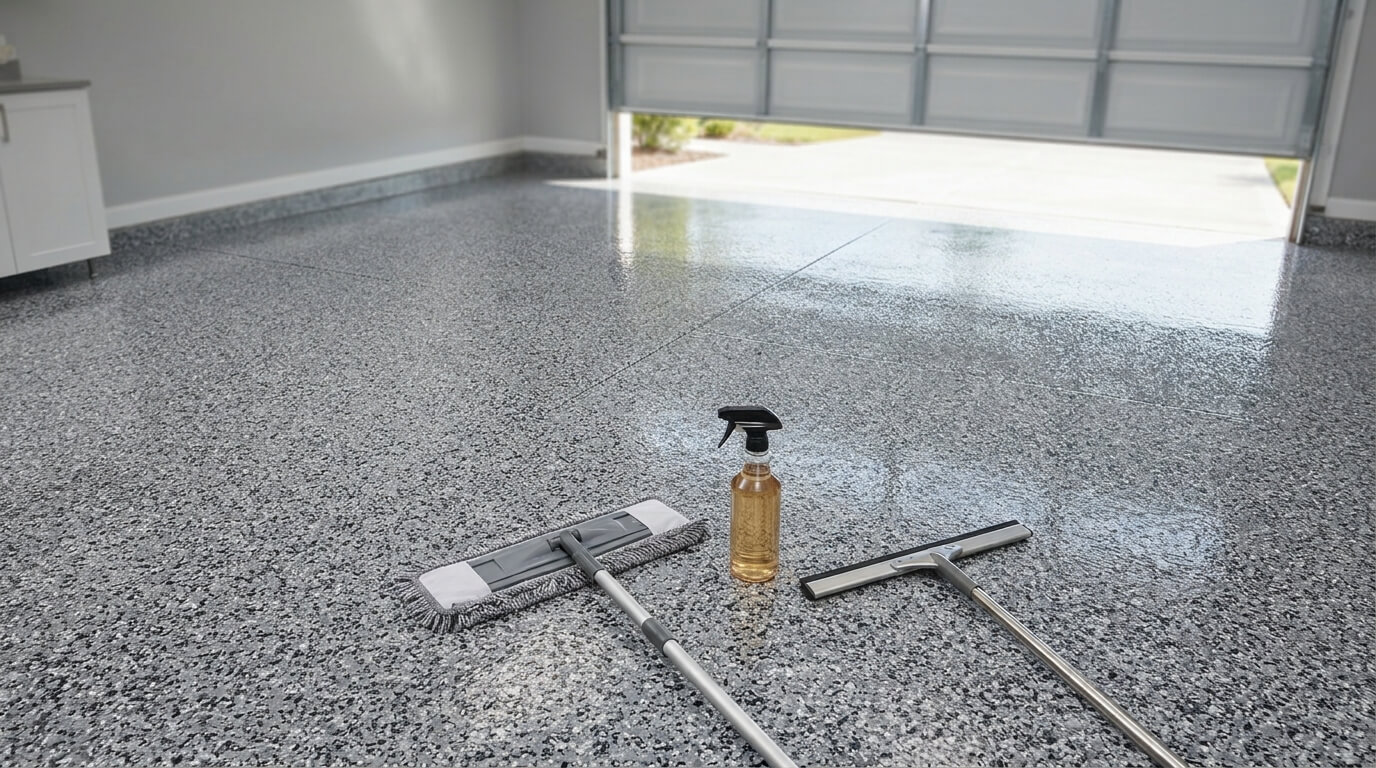
Polyaspartic Garage Floor Care & Maintenance Guide
Maintaining a polyaspartic garage floor is simple because the coating is non-porous, stain-resistant, and durable. But “simple” doesn’t mean “ignore it.” A little routine care keeps the gloss intact, the texture safe, and the surface looking new for 15 to 20 years.
Most maintenance comes down to three things: sweep weekly, mop monthly with a pH-neutral cleaner, and avoid harsh chemicals that break down the resin. The rest is knowing what to do when something spills, stains, or gets tracked in from a Michigan winter.
This guide covers the full routine—from weekly sweeping to deep cleaning, from what to avoid to how to protect the floor through freeze-thaw cycles and road salt. It’s the same care process we recommend to every homeowner after a Great Lakes Concrete Coatings installation.
Why Polyaspartic Needs Care (Even Though It’s Tough)
Polyaspartic coatings are up to four times more durable than standard epoxy. They resist hot tire pickup, road salt, UV exposure, and chemical spills. But durability isn’t invincibility.
The topcoat is what takes the abuse—and it’s the topcoat that determines how long the floor looks new. Dirt and grit act like sandpaper underfoot. Harsh chemicals slowly break down the resin. Abrasive tools scratch the finish. None of these fail the coating overnight, but over months and years, they dull the gloss and wear down the texture.
The good news: Polyaspartic is easy to maintain—much easier than bare concrete or epoxy. A few minutes a week and a deeper clean once a month is all it takes. For a full comparison, see our guide on polyaspartic vs. epoxy garage floor coatings.
Routine Cleaning
This is the core of polyaspartic garage floor maintenance. Do these three things consistently, and the floor stays in great shape.
Weekly Sweep
Use a soft-bristle broom, microfiber mop, or leaf blower to remove abrasive dirt, grit, and small stones. This is the single most important step. Grit tracked in on shoes and tires acts like sandpaper underfoot—it slowly dulls the gloss and scratches the surface.
Prompt Spill Cleanup
Wipe up oil, chemicals, or fluid leaks promptly with a soft cloth or paper towel. Don’t let harsh substances sit for long periods—even a stain-resistant coating can be affected by prolonged exposure to gasoline, brake fluid, or battery acid.
Periodic Washing
Mop or wash the floor with warm water mixed with a pH-neutral soap or an ammonia-water solution (about 4–5 ounces of clear ammonia per gallon of water). Rinse thoroughly with a hose and remove dirty water with a foam squeegee.
Deep Cleaning
Some messes need more than a mop. Oil stains, tire marks, and stubborn grime call for a targeted approach.
Degreasing
Apply a diluted degreaser (roughly 8 ounces per gallon of water) or a mild cleaner like Simple Green. Let it sit for about 10–15 minutes, scrub lightly if needed, and rinse clean.
Tough Stains
Use targeted solutions such as carburetor cleaner for stubborn tire marks or a gentle household cleaner for grease. Test in a small, inconspicuous area first—even targeted cleaners can dull the finish if left too long.
Heavy Salt and Slush
In winter, salt and slush can leave a white film on the floor. A warm-water mop with a pH-neutral cleaner removes it. Rinse and squeegee dry. Don’t let salt sit on the coating for weeks—it’s abrasive and can dull the surface over time.
What to Avoid
Polyaspartic is tough, but it’s not immune to bad chemistry. These will damage the coating over time—or immediately:
- Harsh chemicals: Never use acids, vinegar, citrus cleaners, solvents, or heavy soap-based detergents. These break down the resin and dull the finish.
- Abrasives: Avoid steel wool, stiff wire brushes, or abrasive scouring powders that can scratch the glossy finish.
- Waxes: Do not apply floor waxes. They build up, trap dirt, and make the floor harder to clean.
- Rubber-backed mats and rugs: These can trap moisture and discolor the resin underneath.
- Direct heat and heavy pots: Use protective legs, pads, or dollies under heavy items or potted plants. Direct heat from a hot tire or a potted plant sitting in one spot can leave a mark.
The rule of thumb: If a cleaner smells harsh, foams aggressively, or is acidic, don’t use it. If you’re not sure, warm water and a pH-neutral cleaner will handle almost anything. For product-specific guidance, see what cleaner is safe for polyaspartic floors.
Northern Michigan Winter Care
Traverse City garages take a beating from November through March. Snow melt, road salt, and sand get tracked in daily. This is when maintenance matters most.
- Sweep more often. Twice a week in winter keeps grit and salt from grinding into the coating.
- Mop weekly, not monthly. Salt and slush leave a film that dulls the gloss if left too long.
- Use a floor mat at the door. A good scraper mat at the garage door catches most of the salt and sand before it hits the floor. But choose one that’s not rubber-backed—those trap moisture.
- Rinse after heavy snow. A quick hose-down and squeegee after a big storm keeps salt from sitting on the surface.
- Check the edges. Salt-laden water collects at the door threshold and along the walls. Wipe those areas down more often.
Winter tip: If your floor has an anti-slip texture (and it should), use a soft-bristle brush to work cleaner into the texture. A flat mop alone won’t lift grit from the peaks and valleys. For more on coating safety, see are concrete coatings slippery?
Protecting the Floor Long-Term
Maintenance isn’t just cleaning—it’s preventing damage before it happens.
Use Protective Pads
Felt pads or protective glides under cabinet legs, workbenches, and heavy furniture prevent scratches and dents. Potted plants should sit on a saucer or a protective mat—not directly on the coating.
Avoid Dragging Heavy Items
Lift and carry—don’t drag. Dragging a tool chest, jack, or heavy box across the floor can scratch the finish. Use a dolly when possible.
Keep the Floor Dry When Possible
A wet floor is a slip risk—even with anti-slip texture. Squeegee standing water after washing or after snow melt. Don’t let puddles sit for days.
Schedule a Topcoat Refresh
Depending on traffic and exposure, the clear topcoat may need a refresh every 7–10 years. This restores UV protection and extends the life of the floor without a full redo. Ask your installer about the topcoat’s expected lifespan—our team can assess your floor and let you know when it’s due.
Maintenance Schedule
| Frequency | Task | What to Use |
|---|---|---|
| Weekly | Sweep or blow off grit | Soft-bristle broom, microfiber mop, or leaf blower |
| As needed | Wipe up spills | Soft cloth, paper towel, warm water |
| Monthly | Wet mop the floor | Warm water + pH-neutral cleaner |
| Monthly (winter) | Rinse salt and slush | Warm water + pH-neutral cleaner, squeegee |
| Quarterly | Deep clean high-traffic areas | Diluted degreaser, soft-bristle brush |
| Annually | Inspect edges, joints, and texture | Visual check; call installer if issues appear |
| Every 7–10 years | Refresh clear topcoat | Professional application |
Frequently Asked Questions
How often should I clean my polyaspartic garage floor?
Sweep weekly to remove grit and debris. Wet mop monthly with a pH-neutral cleaner. In winter, mop weekly to remove road salt and slush. Deep clean quarterly or whenever you notice oil stains or tire marks building up.
What cleaner is safe for a polyaspartic garage floor?
A pH-neutral floor cleaner diluted to the manufacturer’s ratio is the safest choice. Warm water alone works for light cleaning. An ammonia-water solution (4–5 ounces per gallon) is also safe. Avoid acidic cleaners, bleach, citrus cleaners, and solvents.
Can I use vinegar on a polyaspartic floor?
No. Vinegar is acidic and will slowly etch the surface, leaving a dull haze over time. Avoid any acidic cleaner—including citrus-based products—on polyaspartic floors.
How do I remove tire marks from a polyaspartic floor?
For light tire marks, warm water and a pH-neutral cleaner usually work. For stubborn marks, a targeted cleaner like carburetor cleaner can be used on a small area—test first, and rinse thoroughly afterward. Don’t scrub hard with an abrasive pad.
Can I use a pressure washer on my polyaspartic floor?
Not recommended. Pressure washers can force water under the coating at edges, seams, and control joints, which can lead to peeling or delamination. A mop and bucket is safer and just as effective.
Do I need to wax my polyaspartic garage floor?
No. Polyaspartic coatings don’t need wax. In fact, wax builds up on the surface, traps dirt, and makes the floor harder to clean. The coating’s own gloss is what gives it the finished look.
What should I do if my garage floor gets scratched?
Light scratches can often be buffed out or spot-repaired with a matching topcoat. Deep scratches that reach the base coat or concrete should be assessed by your installer. Most scratches come from dragging heavy items or using abrasive tools—both preventable.
How do I protect my floor from road salt in winter?
Sweep twice a week in winter, mop weekly with a pH-neutral cleaner, and rinse after heavy snow. Use a scraper mat at the garage door to catch salt and sand before it hits the floor. Avoid rubber-backed mats that trap moisture.
How long does polyaspartic garage floor maintenance take?
Routine maintenance takes about 10–15 minutes a week for sweeping and 20–30 minutes once a month for mopping. Deep cleaning once a quarter takes an hour or two. It’s one of the lowest-maintenance floor coatings available.
Conclusion
Polyaspartic garage floor maintenance comes down to a simple routine: sweep weekly, mop monthly, avoid harsh chemicals, and protect the surface from scratches and direct heat. Do that, and the floor holds its gloss and texture for 15 to 20 years.
In Northern Michigan, winter is the real test. Salt, slush, and sand get tracked in daily from November through March. A little extra care during those months—more frequent sweeping, weekly mopping, and a good door mat—keeps the coating looking new when spring arrives.
If you’re planning a new floor or want to know what maintenance looks like for your specific system, we’re happy to walk you through it. Our polyaspartic installations come with a 15-year warranty and a care plan tailored to Michigan conditions.
Need help with your polyaspartic floor? Great Lakes Concrete Coatings installs and maintains polyaspartic systems across Traverse City and Northern Michigan. If your floor needs a topcoat refresh or a spot repair, we can help. Call (231) 299-6960 for a free assessment.