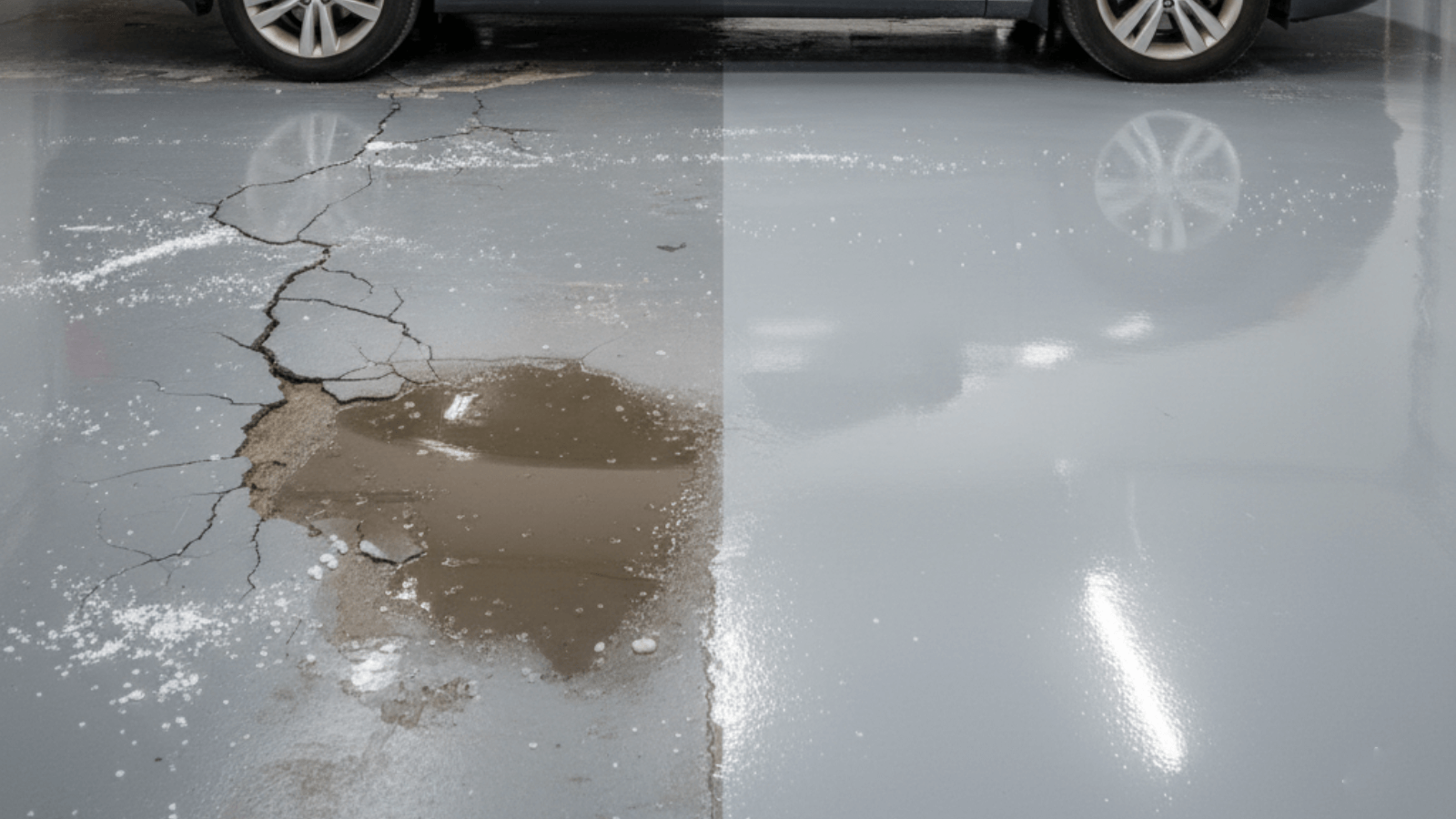
Michigan winters are famous for their beauty, but for homeowners, they represent a relentless assault on property. Between the freezing temperatures and the corrosive road salt, your concrete surfaces endure a punishing six-month gauntlet. When it comes to protecting your investment, choosing the right garage floor coatings in Michigan is the difference between a floor that lasts decades and one that peels within two years.
For years, homeowners have debated between traditional epoxy garage floor Michigan solutions and the more modern polyurea garage floor Michigan systems. While both offer protection, Michigan’s unique climate—defined by extreme freeze-thaw cycles—demands a specific set of chemical properties. In this guide, we will break down which coating truly stands up to the Great Lakes State’s conditions and why professional installation is the key to long-term success.
What Are Garage Floor Coatings?
A garage floor coating is more than just “paint.” It is a chemical bond designed to protect the porous surface of concrete from outside elements. To understand which is better for your home, you must first understand the chemistry behind the two main contenders.
Epoxy Coatings
Epoxy is a thermosetting resin that is created by mixing a resin and a hardener. It creates a thick, hard, and durable surface that bonds tightly to prepared concrete. It has been the industry standard for decades because of its strength and high-gloss aesthetic.
Polyurea Coatings
Polyurea (often used in polyaspartic systems) is a subgroup of polyurethane. It is a much more flexible material than epoxy. While epoxy is rigid and rock-like, polyurea is “elastomeric,” meaning it can stretch and move slightly without breaking. This flexibility is a game-changer for professional concrete coatings used in cold climates.
Michigan Winter Challenges for Garage Floors
Before deciding on a coating, you have to consider what it is fighting against. Michigan presents a “perfect storm” of conditions that destroy unprotected concrete.
- The Freeze-Thaw Cycle: When moisture enters concrete and freezes, it expands. This creates internal pressure that leads to cracking.
- Corrosive Road Salt: Salt doesn’t just sit on the surface; it eats away at the chemical bonds of the concrete and standard paints.
- Moisture Infiltration: High humidity and melting snow create a constant state of dampness in garages and basement concrete coatings, which can lead to delamination if the coating isn’t breathable or ultra-strong.
- Heavy Traffic: From snowplow-equipped trucks to heavy SUVs, the mechanical wear on a Michigan garage floor is significantly higher than in warmer states.
Epoxy Garage Floor Coatings
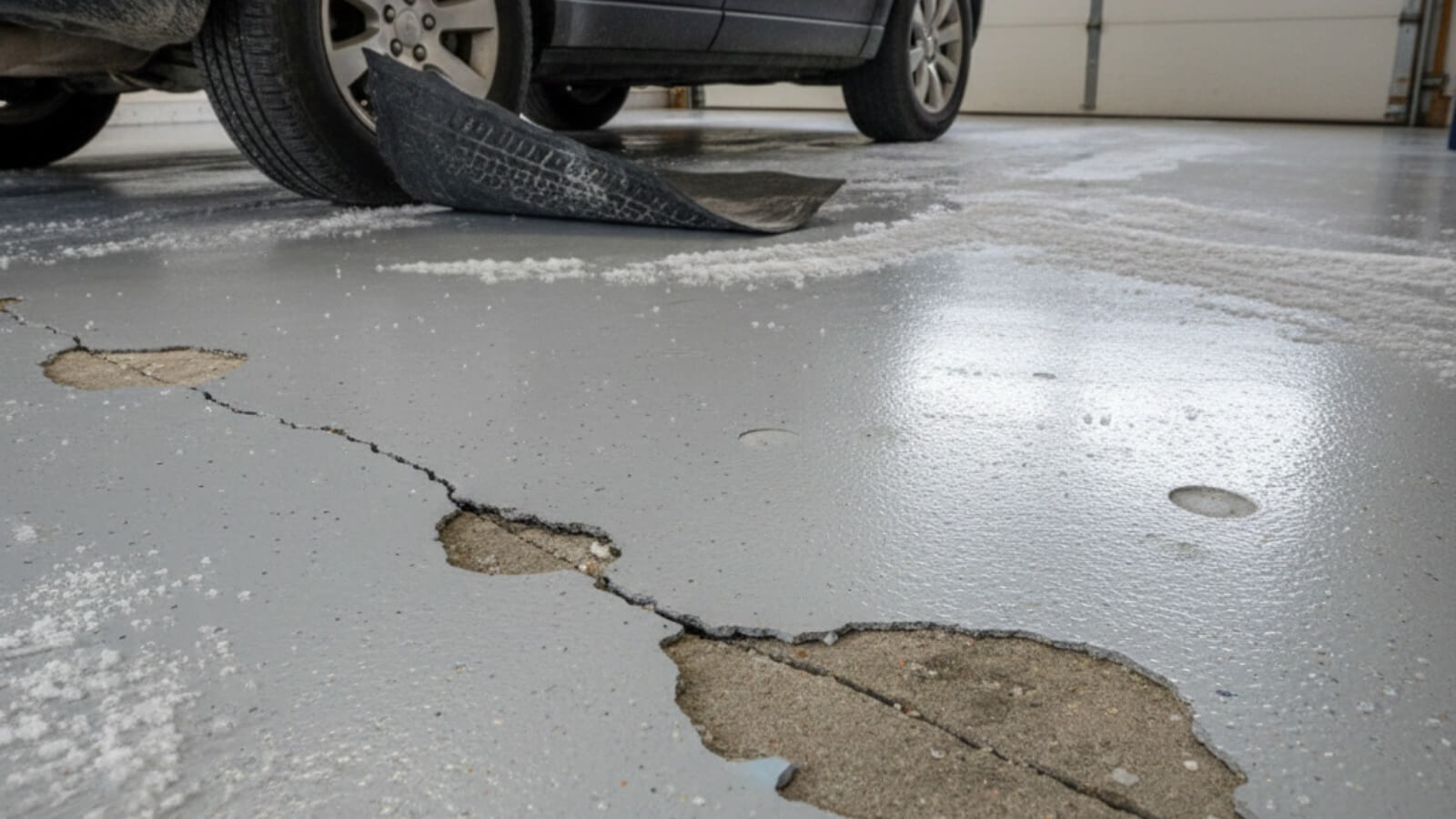
If you are looking for durable garage floor coating options, epoxy is often the first name that comes up. It has several distinct advantages, but also some critical flaws in the Michigan climate.
The Pros of Epoxy
- Cost-Effective: Epoxy is generally more affordable than polyurea, making it a popular choice for large square-footage areas.
- Strong Adhesion: When applied correctly, epoxy creates a very strong mechanical bond with the concrete.
- Thickness: Epoxy is a “high-build” coating, meaning it can fill in minor pits and cracks effectively.
The Cons of Epoxy
- Brittleness: This is the “Achilles heel” for an epoxy garage floor in Michigan. Because epoxy is rigid, it cannot move when the concrete expands and contracts during a cold snap. This often leads to “hot tire pickup,” where the coating peels off under your car tires.
- UV Sensitivity: Most epoxies will yellow or “chalk” when exposed to sunlight through an open garage door.
- Cure Time: Epoxy can take 3 to 7 days to fully cure before you can drive a vehicle on it.
Polyurea Garage Floor Coatings
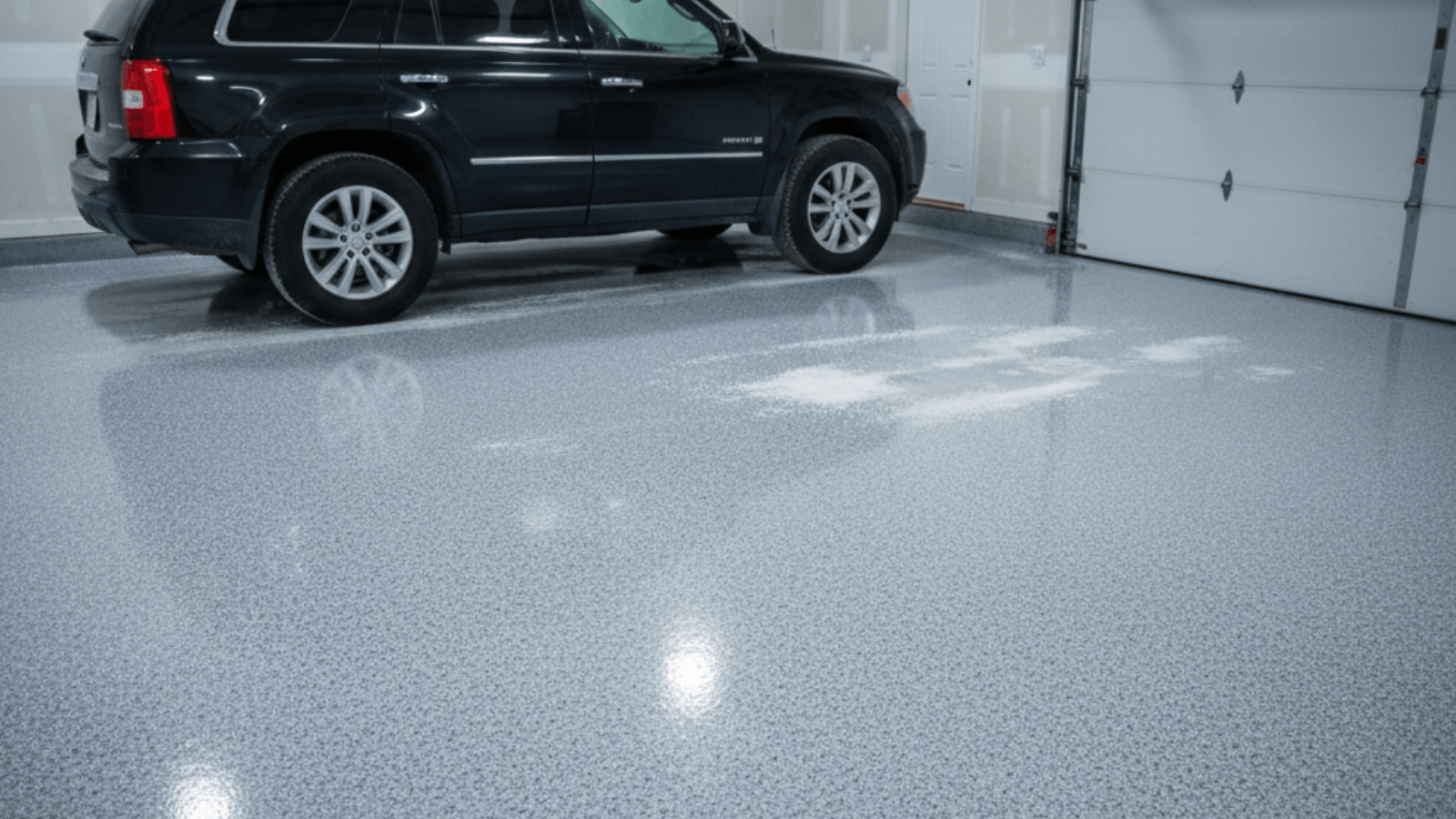
Polyurea was originally developed for industrial use, such as tank liners and bridge decks, but it has become the gold standard for residential garage floor coatings in Michigan.
The Pros of Polyurea
- Extreme Flexibility: Polyurea is roughly 10 times more flexible than epoxy. It can handle the shifting of a concrete slab during a Michigan winter without cracking or peeling.
- Rapid Curing: Most polyurea systems allow you to walk on the floor in 4–6 hours and drive on it within 24 hours.
- Temperature Insensitivity: Unlike epoxy, which can only be applied in specific temperature ranges, polyurea can be applied in temperatures as low as -20°F.
- Chemical Resistance: It is virtually immune to the effects of road salt, oil, and gasoline.
The Cons of Polyurea
- Higher Investment: The raw materials and specialized equipment required for polyurea make it a more expensive upfront investment.
- Professional Only: Polyurea cures so quickly that it is nearly impossible for a DIYer to apply it evenly. It requires a trained team with industrial grinders and specialized rollers.
Epoxy vs. Polyurea – Head-to-Head Comparison
Feature | Epoxy Coatings | Polyurea/Polyaspartic |
Durability in MI Winter | Moderate (Prone to cracking) | Excellent (Flexible) |
Salt & Moisture Resistance | High | Ultra-High |
Installation Time | 3–5 Days | 1 Day |
Lifespan | 5–10 Years | 15–20+ Years |
UV Resistance | Poor (Yellows over time) | Excellent (Won’t fade) |
Our Recommendation
If you are looking for a quick fix for a home you plan to sell soon, epoxy might suffice. However, to truly protect concrete floors in Michigan, we recommend polyurea. Its ability to withstand the freeze-thaw cycle makes it the only coating that provides a permanent solution for the Great Lakes region.
Professional Installation & Benefits
Many homeowners are tempted by “DIY Epoxy Kits” found at big-box retailers. In Michigan, these are almost guaranteed to fail.
Why DIY Fails
The most critical part of any coating is the surface preparation. DIY kits usually suggest an “acid wash,” which barely cleans the surface. Professional installers use diamond grinding to open the pores of the concrete, ensuring the coating sinks deep into the slab. Without this mechanical bond, the moisture from melting snow will eventually push the coating off the floor.
The Professional Advantage
When you choose professional concrete coatings, you aren’t just paying for the material. You are paying for:
- Industrial Equipment: Diamond grinders and HEPA vacuums that ensure a dust-free, porous surface.
- Expert Repair: Professionals will fill every pit and crack with a high-strength mending material before coating.
- Warranty: Most professional polyurea installs come with a multi-year or even lifetime warranty against peeling.
Maintenance & Care Tips
Once your new coating is installed, maintaining it is remarkably easy compared to bare concrete.
- Seasonal Rinsing: In the spring, use a mild, pH-neutral cleaner to wash away the accumulated road salt.
- Avoid Abrasives: You don’t need wire brushes or harsh chemicals. A soft-bristle broom and a squeegee are your best friends.
- Moisture Management: While the floor is waterproof, keeping the garage dry helps prevent mold growth on the drywall and keeps your cars in better condition.
Conclusion: Which Coating Wins in Michigan?
While epoxy has its place in controlled environments, it simply cannot match the performance of polyurea when faced with a Michigan winter. If you want a floor that won’t chip when the salt hits it or peel when the temperatures drop to zero, polyurea is the clear winner for garage floor coatings in Michigan.
Investing in a high-quality coating today means you won’t be spending your spring weekends patching cracks and scraping up peeling paint. Protect your home’s value and enjoy a showroom-quality finish that stands the test of time.
Take the first step toward a permanent floor solution.
Request a free estimate from our expert team today, or explore our specialized garage floor coatings in Traverse City to see how we can transform your space.