

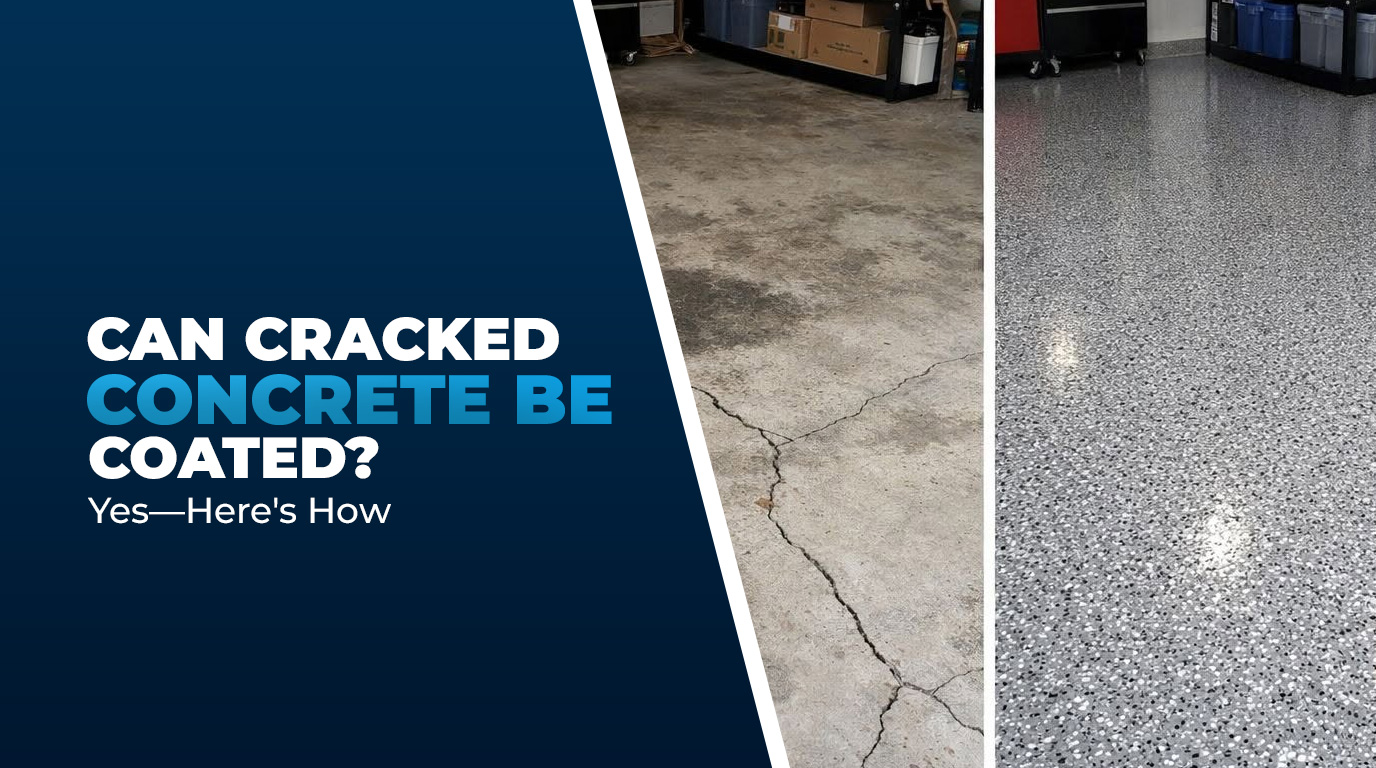
Can Cracked or Damaged Concrete Be Coated?
If your garage floor has cracks, pits, or spalling, you’ve probably wondered whether a coating is even possible—or if you’re stuck staring at damaged concrete forever. The short answer: yes, cracked or damaged concrete can be coated in most cases—provided the slab is structurally sound and the damage is properly repaired before the finish goes down.
A coating cannot fix an active structural failure or stop a slab from shifting. But it can seal, protect, and dramatically improve the appearance of concrete that has cosmetic damage—hairline cracks, surface pitting, spalling, and stable settlement cracks.
This guide explains when coating works, when it doesn’t, how professionals prepare cracked concrete, and why Michigan’s freeze-thaw cycles make proper repair even more important. Whether you’re a homeowner with a cracked garage floor or a facility manager with a damaged warehouse slab, the process is similar—but the stakes are higher for commercial spaces.
When Cracked Concrete Can Be Coated
Most cosmetic and stable damage is coatable. Here’s what falls into that category:
Hairline and Non-Structural Cracks
Normal shrinkage or minor settlement cracks are very common and easily patched. If the crack isn’t widening and the slab around it is sound, it can be routed out, filled, and coated.
Surface Pitting and Spalling
Flaking or rough top layers can be ground down, filled with concrete patch or liquid polymer, and smoothed. Spalling is cosmetic when it’s limited to the surface—it becomes a problem when it goes deep enough to weaken the slab.
Stable Slabs
If the concrete has cracked once and settled into a stationary position, it’s generally a good candidate for restoration. The key word is stable—the crack is done moving.
The rule of thumb: If the crack is “dead” (static) and the slab is sound, it can be repaired and coated. If the crack is “alive” (moving) or the slab is failing, the problem needs to be fixed first—or a coating isn’t the right solution.
When It Cannot (or Should Not) Be Coated
Some damage is beyond what a coating can fix. In these cases, coating over the problem makes it worse—not better.
Active or Moving Cracks
If a crack is still widening, shifting, or heaving due to soil movement, a rigid or semi-rigid topical coating will quickly crack right back open. The coating isn’t the problem—the moving slab is. A structural fix or foundation repair comes first.
Severe Structural Failure
Slabs that are heavily broken into multiple sinking pieces, severely degraded, or missing deep structural integrity usually need full removal and replacement rather than a surface coating. A coating can’t restore a slab that has lost its base.
High Moisture Vapor Transmission (MVT)
Basements or slabs with chronic moisture issues require a dedicated vapor-barrier primer first—or the coating will delaminate and bubble. Moisture vapor is the silent killer of coatings, and it’s especially common in older Michigan slabs with no vapor barrier underneath.
Honest contractor test: A good installer will tell you when a coating isn’t the right solution. If your concrete has active movement, structural failure, or chronic moisture, the answer may be repair first—or a different flooring option entirely.
How Cracked Concrete Is Prepared for Coating
To make a coating last on damaged concrete, installers follow a strict multi-step routine. Skip a step, and the coating fails—often within a year.
Determine if cracks are dead (stable) or alive (moving). Check for spalling, pitting, oil contamination, old coatings, and moisture. This step determines whether coating is even possible.
Open up cracks using a diamond blade or grinder wheel to remove loose debris, old sealants, and weak edges. “Chasing” the crack creates a clean channel for the filler to bond to sound concrete.
Fill the cleaned cracks or pits using flexible, high-tensile joint fillers—such as polyurea or epoxy menders—rather than standard brittle paint or cement patch. These materials bond tightly with the slab and move with it.
Mechanically grind the entire slab with a diamond cup wheel or floor grinder to remove old sealants, oil, or paint, creating a porous profile so the new coating can bond to sound concrete. This is the step that makes or breaks the coating.
Choose the right material for the space. Garages and basements typically use polyurea/polyaspartic or multi-layer epoxy systems. Driveways and patios need flexible polyurea or breathable decorative overlays designed to flex with outdoor thermal expansion.
The prep is the difference between a 2-year floor and a 20-year floor. A coating over unrepaired cracks will telegraph through the finish. A coating over properly filled and ground cracks looks seamless—and stays that way.
Residential Applications: Garages, Basements, Patios
For homeowners, cracked concrete in garages and basements is the most common scenario. The good news: most residential cracks are cosmetic and coatable.
Garage Floors
Hairline cracks, shrinkage cracks, and light surface spalling can be patched and coated. Polyurea/polyaspartic systems are the best choice for garages because they flex with temperature changes and resist hot tire pickup, road salt, and chemical spills.
Basements
Basement cracks can often be coated—but moisture testing is critical. If the slab has high moisture vapor, a moisture vapor barrier primer is required before the coating goes down.
Patios and Driveways
Outdoor concrete faces more thermal expansion and freeze-thaw stress. Flexible polyurea systems or breathable decorative overlays work better than rigid epoxy on outdoor slabs.
What Homeowners Should Know
- Small cracks are not a dealbreaker. A professional installer can patch them before coating.
- Active cracks are. If a crack keeps widening, fix the source first.
- Moisture matters. Basement slabs need testing before coating.
- Outdoor surfaces need different systems. Standard epoxy is a poor choice for patios and driveways.
Commercial Applications: Warehouses, Retail, Industrial
In commercial settings, cracked concrete is more than cosmetic. A failed coating means downtime, safety risks, and lost revenue. The same preparation principles apply—but the stakes are higher.
Warehouses and Distribution Centers
Heavy forklift traffic, rolling loads, and constant abrasion mean cracks must be repaired with high-strength materials. Polyurea joint fillers and epoxy menders are common. Coatings should be industrial-grade polyurea/polyaspartic systems designed for heavy traffic.
Retail and Showrooms
Cracks in retail spaces are usually cosmetic but visible. Diamond grinding and seamless patching before coating give a finished floor that looks high-end—even if the original slab had cracks.
Industrial Facilities
In food processing, chemical plants, and manufacturing, structural cracks require engineering evaluation before coating. A coating may be part of the solution, but only after the structural issue is addressed.
Commercial Considerations
- Downtime matters. Fast-cure polyaspartic systems allow same-day or overnight installation.
- Traffic loads matter. Heavy-duty systems are needed for forklift and truck traffic.
- Documentation matters. Commercial clients often need repair documentation, warranties, and maintenance schedules.
- Moisture testing is non-negotiable. Large slabs often have areas of high moisture vapor that must be addressed.
For commercial facilities in Traverse City and Northern Michigan: A failed coating means more than a bad look—it means lost productivity and potential safety issues. Choose a contractor who tests, repairs, and documents before coating.
Why Michigan Conditions Matter
Michigan’s freeze-thaw cycles, road salt, and humidity mean standard DIY paint or brittle epoxy can crack, peel, or yellow over time. The same cracks that look cosmetic in July can open up in January.
Freeze-Thaw Resilience
Michigan’s harsh winter freeze-thaw cycles and de-icing road salts put heavy stress on concrete. Industrial-grade systems like polyaspartic or polyurea offer much higher flexibility and durability than basic DIY epoxy kits, helping them move with the concrete rather than cracking or peeling.
Moisture Vapor Barriers
Professional Michigan installers often use moisture-blocking basecoats to stop subsurface humidity and vapor from pushing the coating off the slab. This is especially important in older homes and basements without a vapor barrier underneath.
Local Expertise
Companies operating in the region—like Great Lakes Concrete Coatings—typically evaluate the slab’s condition first, perform diamond grinding and structural crack mending, and apply multi-layer systems (base coats, decorative vinyl/mica flakes, and a clear UV-stable topcoat).
Local tip: Schedule concrete repair and coating before the first hard freeze. Fall is the best window in Northern Michigan—the slab is still warm, the air is dry, and the coating has time to cure before winter stress begins.
Best Coating Systems for Cracked Concrete
Not every coating system is equally suited to repaired concrete. Here’s how the main options compare:
| System | Best For | Flexibility | UV Stable | Lifespan |
|---|---|---|---|---|
| Polyurea / Polyaspartic | Garages, basements, commercial | High | Yes | 15–20+ years |
| Multi-layer Epoxy | Indoor industrial, warehouses | Moderate | No | 10–15 years |
| DIY Epoxy Kit | Light residential, storage | Low | No | 2–5 years |
| Flexible Polyurea (Outdoor) | Patios, driveways, pool decks | Very High | Yes | 10–15 years |
| Decorative Overlay | Patios, walkways, pool decks | High | Varies | 10–15 years |
For most residential garages and basements in Michigan, polyurea/polyaspartic systems are the best choice. They flex with temperature changes, resist UV, and handle road salt and chemical exposure better than standard epoxy.
Frequently Asked Questions
Can you coat concrete with cracks?
Yes—if the cracks are stable and properly repaired first. Hairline cracks, shrinkage cracks, and cosmetic spalling can be routed out, filled with polyurea or epoxy mender, ground flush, and coated. Active or moving cracks need to be addressed before coating, or the coating will crack again.
Will a coating hide cracks in concrete?
A coating will hide cracks that have been properly repaired and ground flush. It will not hide active cracks—they will telegraph through the coating and cause it to crack. The key is repairing the crack first, then coating over the repaired surface.
What happens if you coat a cracked floor without repairing it?
The coating will crack along the same line as the original crack—often within weeks or months. If the crack is active, the coating may also delaminate at the edges. Repairing cracks before coating is not optional; it’s the difference between a lasting floor and a failed one.
How do you fix cracks before coating?
Professionals “chase” the crack with a diamond blade to remove loose material, fill it with a flexible polyurea or epoxy mender, let it cure, and grind it flush with the surrounding concrete. Then the entire slab is diamond-ground and coated. This creates a seamless surface that won’t telegraph through the finish.
Can you coat a basement floor with cracks?
Yes—but moisture testing is critical. Basement slabs often have high moisture vapor transmission, which can cause the coating to bubble or delaminate. A moisture vapor barrier primer is required before coating if moisture is present. Cracks themselves are usually repairable.
Can you coat a garage floor with spalling?
Yes, if the spalling is limited to the surface. The weak, flaking concrete is ground down, filled with patch material, and smoothed before coating. If the spalling is deep enough to weaken the slab, the concrete may need more extensive repair or replacement before coating.
What is the difference between an active and static crack?
A static (dead) crack has stopped moving and is stable. It can be filled and coated. An active (live) crack is still widening, shifting, or heaving due to soil movement or structural issues. Coating over an active crack will fail—the underlying problem needs to be fixed first.
How much does it cost to repair and coat cracked concrete?
Cost depends on the extent of the damage, the size of the area, and the coating system. Minor crack repair adds $1–$3 per square foot to a standard coating job. Extensive repair or moisture mitigation can add more. A professional on-site quote is the only way to get an accurate number.
Can cracked concrete be coated in Michigan winters?
Polyaspartic systems can be installed at lower temperatures than standard epoxy—often down to 40°F or slightly below, depending on the product. However, ideal conditions are 55–85°F with low humidity. In Northern Michigan, fall is the best window for repair and coating before the first hard freeze.
Conclusion
Cracked or damaged concrete isn’t a dealbreaker for a coating project—but it does change the process. Stable cracks, surface pitting, and cosmetic spalling can all be repaired and coated. Active cracks, structural failure, and chronic moisture need to be addressed first.
The difference between a coating that lasts and one that fails comes down to preparation: evaluating the damage, chasing and filling cracks, diamond grinding the slab, and choosing the right system for the environment.
Not sure if your cracked concrete can be coated? Great Lakes Concrete Coatings will inspect your slab, test for moisture, and tell you honestly what’s possible. Call (231) 299-6960 for a free on-site quote—residential or commercial. We’ll assess the damage, explain your options, and give you a clear plan before any work begins.